
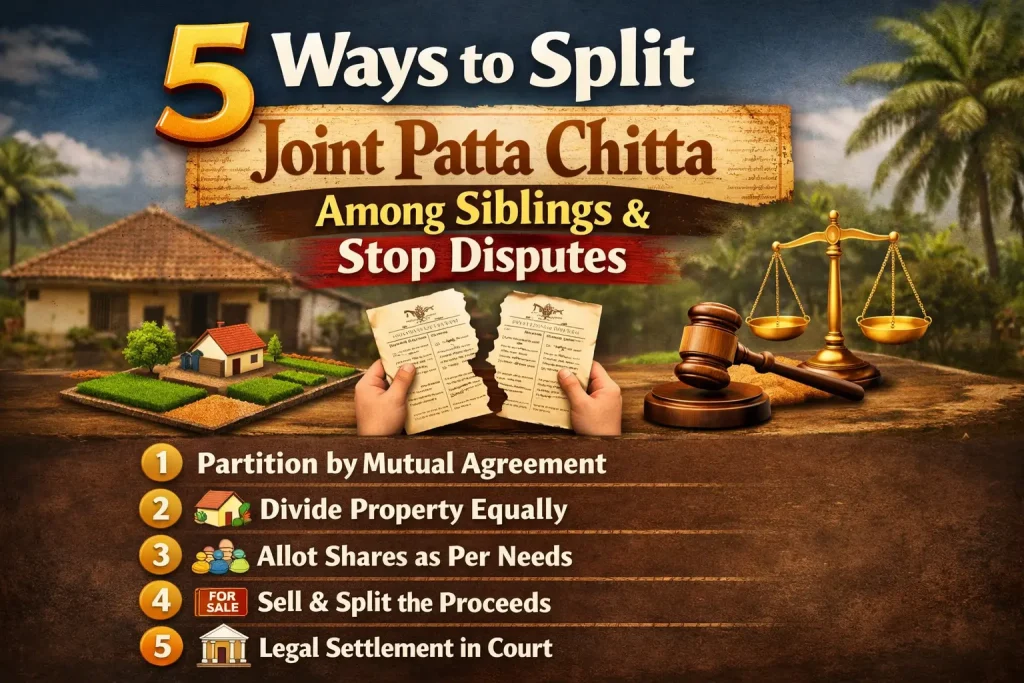
5 Ways to Split Joint Patta Chitta in Siblings Avoid Disput
In the context of jointly owned land, particularly among siblings, managing the Patta Chitta can often be challenging. Disagreements about ownership, land usage, or boundaries can complicate the process of obtaining individual land documents.
Ensuring that the Patta Chitta is properly handled and updated is critical for maintaining clarity in property ownership,missing ownership and avoiding delays in property transactions. This article will guide you through managing Patta Chitta for jointly owned land, with a focus on how to resolve mismatches and streamline property dealings among siblings.

What Is Patta Chitta?
A Patta Chitta is a crucial land document in India that records ownership and related details of land. Here Correct Patta Chitta refers to the legal title or ownership record, while Chitta typically refers to the land record that includes details like land classification, usage, and owner’s details. When it comes to jointly owned land, particularly in sibling scenarios, a Joint Patta Chitta includes all co-owners’ details. Proper management of these records is essential to avoid disputes, especially when it comes to property transactions or loans.
Importance of a Joint Patta Chitta
Having a Joint Patta Chitta ensures that all co-owners, including siblings, are recognized as the rightful owners of the property in official land records. This documentation is important for several reasons, Get your Duplicate Patta Chitta online and seamlessly connect it with Joint Patta Chitta records for accurate land ownership verification, property transfer, and hassle-free legal documentation.
Property Transactions: A Joint Patta Chitta helps ensure that all siblings’ shares are recognized when buying or selling the property.
Loan Approvals: Financial institutions often require a Joint Patta before granting bank loans, to confirm shared ownership.
Legal Clarity: Having an updated Joint Patta prevents legal disputes about land ownership, ensuring smooth property dealings.
What Happens When Siblings Disagree Over Land Ownership?
Disagreements between siblings regarding the land’s division or usage can create problems when managing the Patta Chitta. The key to resolving such issues is creating a Partition Deed. This legal document outlines how the property will be divided, and once registered with the Revenue Office, it allows siblings to claim separate Patta Chittas for their respective shares.
Steps to Obtain Separate Patta Chittas
If the siblings decide to divide the land, here’s the general process to apply for individual Patta Chittas:
Step 1:Agree on the Division
Siblings must first agree on how to divide the land. The division can be based on various factors such as land value, usage, or size.
Step 2: Submit the Partition Deed
After the division is agreed upon, a Partition Deed should be drafted and submitted to the Revenue Office. This document formalizes the division of the land.
Step 3: Land Survey (if necessary)
In certain cases, a land survey might be necessary to mark the boundaries clearly and ensure an accurate division. This helps avoid confusion over the size and extent of each sibling’s land share.
Step 4: Obtain Individual Patta Chitta
Once the Partition Deed is filed and the land surveyed, each sibling will receive a separate Patta Chitta for their share.
Common Problems with Joint Patta Chitta
While a Joint Patta Chitta simplifies the recognition of ownership, several issues can arise:
Survey errors may lead to incorrect land measurements or misplaced boundaries, potentially causing disputes between siblings. These issues can delay land transactions or create legal challenges.
Without a Partition Deed, joint ownership remains unclear. This lack of clarity complicates land management and can lead to disputes about land usage, sales, or lease agreements.
If the Patta Chitta remains joint and not divided, banks or potential buyers may be reluctant to engage in property transactions, as they often require individual Patta Chittas for each co-owner.
Tips for Managing Joint Patta Chitta
To avoid complications and ensure smooth handling of joint ownership, siblings should consider the following strategies:
It’s best for siblings to discuss and agree on the division and usage of the land early in the process. Clear communication helps prevent misunderstandings and provides a foundation for future decisions.
A Partition Deed formalizes the division of the property. Siblings should seek legal assistance to ensure that the deed is properly drafted and legally binding.
Ensure that all property documents, including the Patta Chitta and Partition Deed, are regularly updated. Keeping accurate records helps prevent delays or legal complications down the road.
In case of disputes or complications, consulting with a property lawyer is essential. A legal expert can provide guidance on how to handle disagreements and ensure that the Patta Chitta is correctly updated.
Legal and Tax Implications of Joint Patta Chitta
Co-owning land with siblings comes with its own set of responsibilities, both legal and financial:
Shared Responsibility for Major Decisions:
As co-owners, siblings must agree on major decisions such as selling, leasing, or mortgaging the land. Disagreements can delay or complicate these processes.
Tax Liabilities:
Each sibling is responsible for their share of property taxes. Additionally, if the land is sold, capital gains taxes will be assessed based on the profit from each sibling’s share.
Power of Attorney (POA):
In situations where one sibling cannot manage the land (due to distance, health, etc.), a Power of Attorney (POA) can be used. This legal tool allows one sibling to make decisions on behalf of others.
FAQs
Final Words:
Managing Patta Chitta for jointly owned land requires clarity, legal documentation, and proper communication between siblings. By following the correct steps, such as drafting a Partition Deed and keeping records up to date, siblings can ensure that their respective shares are officially recognized and avoid complications in property transactions. Properly managing these records helps maintain clear ownership, avoid legal disputes, and ensure smooth dealings in the future.


