
How to Fix EC Mismatch in Patta Chitta 3 Steps & Avoid Delay
Patta Chitta and Encumbrance Certificates (EC) are essential documents for property transactions. A mismatch between these two can lead to delays, legal issues, and loan rejections. This guide explains how to identify, fix, and prevent mismatches between Patta Chitta and EC in Tamil Nadu.
Importance of Accurate Patta Chitta and EC
Patta Chitta and EC are vital for verifying property ownership. Here’s why these documents matter:
These documents are official proof of property ownership. Mismatched details can lead to ownership disputes and complicate the legal process.
Banks require matching Patta and EC documents for loan approval. Discrepancies can delay or reject loan applications.
Government bodies use these documents for land registration. Mismatched records can cause delays in property registration and lead to legal issues.
Importance of Accurate Patta Chitta and EC
Failure to resolve discrepancies can result in a host of legal complications, such as property disputes, title challenges, or bank loan rejections. Since the Encumbrance Certificate is often used by financial institutions for property loan assessments, inconsistencies between Patta Chitta and EC can make it difficult to acquire funding. Further, delayed transactions can affect property valuation, potentially leading to financial losses.How to Avoid Bank Loan Rejection.
How to Avoid Bank Loan Rejection.These are some tips to reduce the risk of rejections.
Factors causing mismatches
Mismatches are often caused by the following factors:If you notice an EC mismatch resurvey is required, follow the steps outlined here.
If the mutation (ownership transfer) isn’t updated after a sale, the Patta may not reflect the new owner’s details, causing discrepancies with the EC.
Small errors, such as incorrect spellings, survey numbers, or other details, can cause mismatches.
If the mutation isn’t updated promptly after a property transfer, the information in the Patta and EC won’t match.
If a property’s land use has changed, the Patta might not reflect the updated classification, leading to mismatched records.
Mutation delays in inherited property transfers may lead to discrepancies.
How to Fix a Mismatch Between Patta Chitta and EC
To resolve mismatches, follow these steps:
Step 1: Gather All Necessary Documents
Sale Deed
Patta Chitta
Encumbrance Certificate (EC)
Government-issued ID Proof
Step 2: Visit the Taluk Office
Go to the Taluk Office or meet with the Village Administrative Officer (VAO). If the Patta mutation hasn’t been updated, they will assist in starting the correction process. You may need to meet with the Tahsildar to apply for the update.
Step 3: Apply for Mutation of the Patta
Step 3: Apply for Mutation of the Patta
If the mutation hasn’t been reflected in the Patta, apply for it. Ensure all required documents are submitted to update the ownership details.
Step 4: Apply for EC Correction
If the issue lies with the EC, apply for an EC correction at the Sub-Registrar’s Office. Submit the Sale Deed and the updated Patta Chitta to ensure the EC is corrected.
Step 5: Follow-up on the Process:
After submission, stay in touch with the authorities to monitor progress. Ensure the corrections are made in a timely manner and follow up if necessary.
These documents will help initiate the correction process.
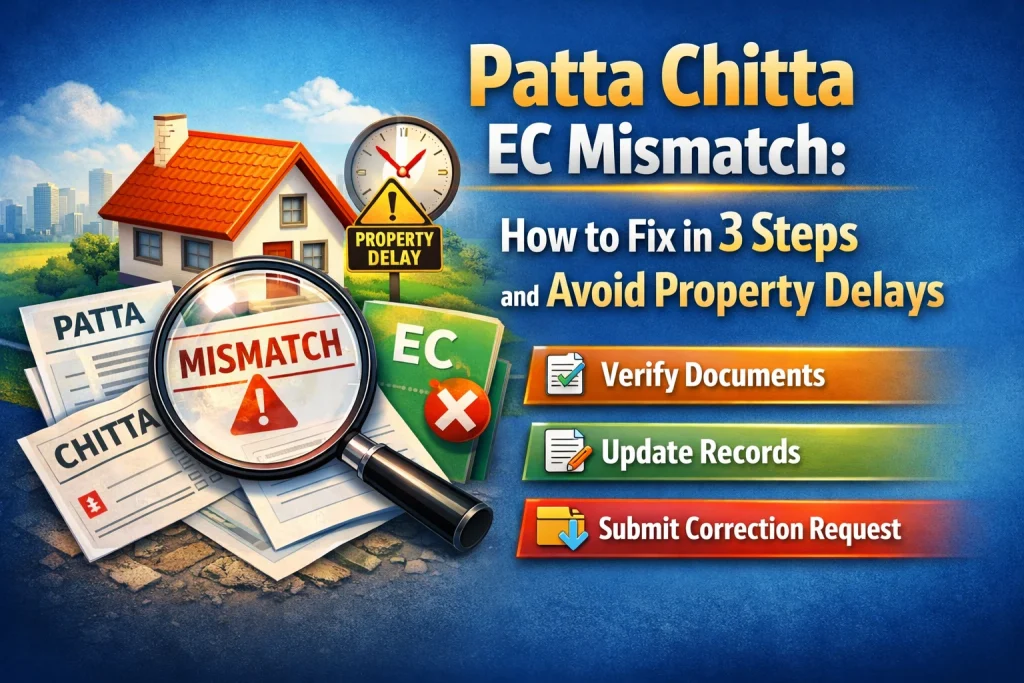
Consequences of a Mismatch Between Patta Chitta and EC
Mismatches can have severe consequences, such as:
A mismatch will delay the property sale, as both buyers and financial institutions may reject the transaction due to inconsistencies.
Without matching Patta and EC documents, banks may reject your loan application, making it difficult to secure financing.
Mismatched documents can lead to legal disputes, especially in inheritance or property ownership matters.
Increased risk of unauthorized encroachments or other legal issues.Potential acquisition of properties with unresolved financial liabilities (e.g., unpaid loans, taxes).
Property registration may be delayed or rejected by authorities.Rejection of property loan applications due to mismatched records.
Mismatched records can lead to conflicts between landowners, financial institutions, and government agencies.Legal battles may arise to resolve discrepancies.
Resolving discrepancies often involves legal fees and administrative costs, which can add up.
Resolving discrepancies often involves legal fees and administrative costs, which can add up.
Tips to Prevent Mismatches Between Patta Chitta and EC
To avoid mismatches, follow these tips:
Regularly Check Documents
Always verify that both Patta Chitta and EC match after property transactions. Detecting discrepancies early can save time and effort later.
Complete Mutation Process Promptly: Ensure that mutation is completed promptly after property transactions to avoid discrepancies between documents.
Keep Documents Organized:
Store documents like Sale Deed, Patta Chitta, and EC together to easily track changes and spot discrepancies.
Engage Legal Assistance:
Consult with a lawyer specializing in property law if you’re unsure about the correction process. Legal help ensures all requirements are met.
Educate Yourself on Land Record Processes:
Understand local regulations and the processes for land mutations and documentation to avoid errors.

(FAQs)
Final Words:
A mismatch between Patta Chitta and EC can create significant obstacles during property transactions. By addressing these issues quickly and keeping documents updated, you can avoid delays, legal complications, and loan rejections. Regular checks, timely updates, and legal advice are essential to ensure that your property records remain accurate and secure.
